
Attachment Theory: Understanding The Emotional Blueprint Behind Our Relationships
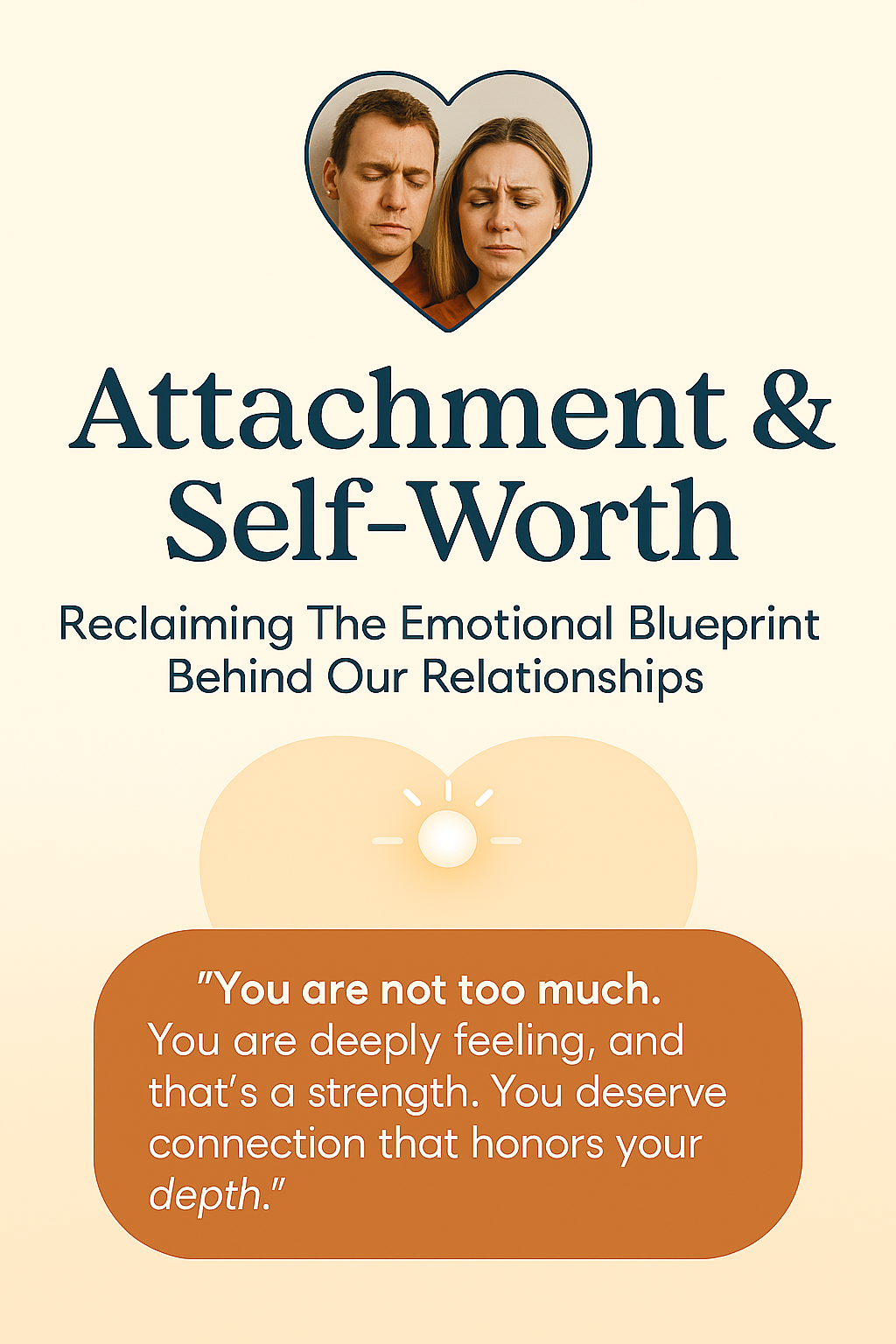
Have you ever found yourself repeating the same relationship patterns, even when you know they’re not serving you? Maybe you crave closeness but fear being too much. Or you pull away when someone gets too emotionally close. These behaviors aren’t random—they’re often rooted in something deeper: your attachment style.
Attachment theory offers a powerful framework for understanding how we connect, protect, and relate emotionally. It’s not just about romantic relationships—it’s about how we show up in friendships, family dynamics, and even how we treat ourselves.
For women navigating emotional health, self-worth, and relational wellbeing, this theory can be a game-changer. It helps us name what’s happening beneath the surface, and more importantly, it gives us tools to heal.

🌱 What Is Attachment Theory?
What is attachment theory?
Attachment theory explains how early relationships shape emotional patterns and influence how we connect with others. It identifies four styles—secure, anxious, avoidant, and disorganized—that impact intimacy, boundaries, and self-worth.
Originally developed by John Bowlby, and expanded by Mary Ainsworth, this theory shows how childhood bonds form emotional blueprints that guide adult relationships.
Want to explore how early emotional patterns affect adult relationships? Read our article on Emotional Availability and Boundaries.

🔍 The Four Attachment Styles: How We Learn to Love and Protect Ourselves
Attachment styles are emotional survival strategies—ways we learned to connect, cope, and protect ourselves in relationships. They’re not personality traits or fixed identities. They’re adaptive patterns shaped by early experiences, and they can evolve with awareness and healing.
Here’s a breakdown of the four main styles:
💚 1. Secure Attachment
Core Traits: Emotionally available, trusting, comfortable with intimacy and independence.
Relational Patterns: People with secure attachment tend to communicate openly, set healthy boundaries, and navigate conflict with resilience. They feel safe expressing needs and receiving love without fear of rejection or engulfment.
Healing Insight: This style often develops in emotionally consistent environments—but it can also be cultivated through self-trust and supportive relationships later in life.
💛 2. Anxious Attachment
Core Traits: Craves closeness, fears abandonment, often hyper-aware of emotional shifts.
Relational Patterns: May over-function in relationships, seek constant reassurance, and feel devastated by perceived rejection. Emotional highs and lows are common, driven by a deep longing to feel secure.
Healing Insight: This style often stems from inconsistent caregiving. Healing involves building self-worth, regulating emotions, and learning to trust that love doesn’t require overextending.
💙 3. Avoidant Attachment
Core Traits: Values independence, struggles with vulnerability, downplays emotional needs.
Relational Patterns: May appear distant or self-reliant, avoid emotional intimacy, and feel overwhelmed by closeness. Often copes by withdrawing or intellectualizing feelings.
Healing Insight: This style can develop in emotionally dismissive environments. Healing means gently reconnecting with emotional needs and learning that intimacy doesn’t threaten autonomy.
💔 4. Disorganized Attachment
Core Traits: Conflicted, fearful, often rooted in trauma or loss.
Relational Patterns: Push-pull dynamics, unpredictable emotional responses, difficulty trusting others. May crave connection but fear it at the same time, leading to chaos or shutdowns.
Healing Insight: This style often arises from relational trauma. Healing involves trauma-informed care, self-compassion, and building safety through consistent, nurturing relationships.
Curious how these styles show up in everyday life? Check out our guide on Recognizing Relational Patterns.
💬 Why It Matters for Women’s Emotional Health
Understanding your attachment style isn’t about labeling yourself—it’s about gaining emotional clarity. For women especially, who are often socialized to prioritize relationships and emotional caretaking, attachment theory can illuminate why certain dynamics feel so familiar… and so exhausting.
It helps explain:
- Why you might feel drawn to emotionally unavailable partners
- Why setting boundaries feels terrifying or guilt-inducing
- Why you over-function in relationships, trying to earn love
- Why you feel anxious when someone pulls away—or numb when they get too close
Explore our Self-Worth Series for more insights into healing and empowerment.
🪞 Self-Reflection Prompts
Here are a few questions to explore your own attachment blueprint:
- What did emotional safety look like in my childhood?
- Was love consistent, or did I have to earn it?
- Do I tend to chase closeness or retreat from it?
- How do I respond when someone pulls away emotionally?
- What does a secure relationship feel like to me?
Looking for a daily practice to support emotional clarity? Download our free Self-Love Daily Checklist to start building trust with yourself.
🌸 Healing Toward Secure Attachment
Here’s the empowering truth: you can shift your attachment style. Through self-awareness, emotionally safe relationships, and sometimes therapy, it’s possible to move toward secure attachment—even if you didn’t start there.
Steps Toward Healing:
- Build trust with yourself first
- Practice emotional regulation
- Set and respect boundaries
- Choose relationships that honor your worth
- Reparent yourself with compassion
Need support on this journey? Explore Therapy Resources for Women to find professionals who specialize in attachment and emotional healing.
Want to learn how to set boundaries that feel empowering, not isolating? Visit our Healthy Boundaries Toolkit.

💡 Attachment and Self-Worth
Attachment theory isn’t just about how you relate to others—it’s about how you relate to yourself. If you grew up feeling unseen, unheard, or emotionally neglected, you may have internalized the belief that you’re not worthy of love unless you perform, please, or disappear.
But your worth isn’t conditional. You don’t have to earn love by shrinking yourself or overextending. You are worthy simply because you exist.
As you heal your attachment wounds, you’ll begin to feel more grounded in your own value. You’ll stop chasing people who can’t meet you emotionally. You’ll start choosing relationships that feel safe, reciprocal, and nourishing.
Want to explore this further? Read our article on Reclaiming Emotional Safety.
🧠 Attachment in Everyday Life
Attachment shows up in subtle ways:
- How you respond to a friend canceling plans
- How you feel when someone doesn’t text back right away
- How you interpret silence, conflict, or emotional distance
- How you treat yourself when you’re hurting
By noticing these patterns, you can begin to rewrite them. There is space to pause before reacting. Curiosity may be chosen instead of fear. Emotional safety is something long deserved and still available.
Want to explore how attachment intersects with trauma recovery? Visit NICABM’s Attachment & Trauma Resources for expert insights.
💬 Final Thoughts
Attachment theory isn’t a box—it’s a mirror. It reflects the emotional strategies you’ve used to survive, and it invites you to choose new ones that support your healing.
For women navigating emotional health, self-worth, and relational wellbeing, this theory offers a roadmap. Perfection isn’t the goal, presence is; control isn’t the answer, connection is.
Never too much, never too needy, never too distant—simply human, with a heart that longs to feel safe, seen, and loved.
And that longing? It’s not a weakness. It’s a guide.
📣 Join the Conversation
Want to explore these topics in a supportive space with other women?

👉 Join the Woman’s Daily Needs Facebook Group Today
Join me now in the Woman’s Daily Needs Facebook Group
“Your worth isn’t conditional on shrinking yourself or overextending; you are worthy just as you are.”

Kiersti writes on self-love and personal development professionally. Over the past ten or so years, she has studied self-love and personal growth. Visit https://womansdailyneeds.com/ to learn more about what she does, and like her on Facebook at https://facebook.com/womansdailyneeds to keep up with her.